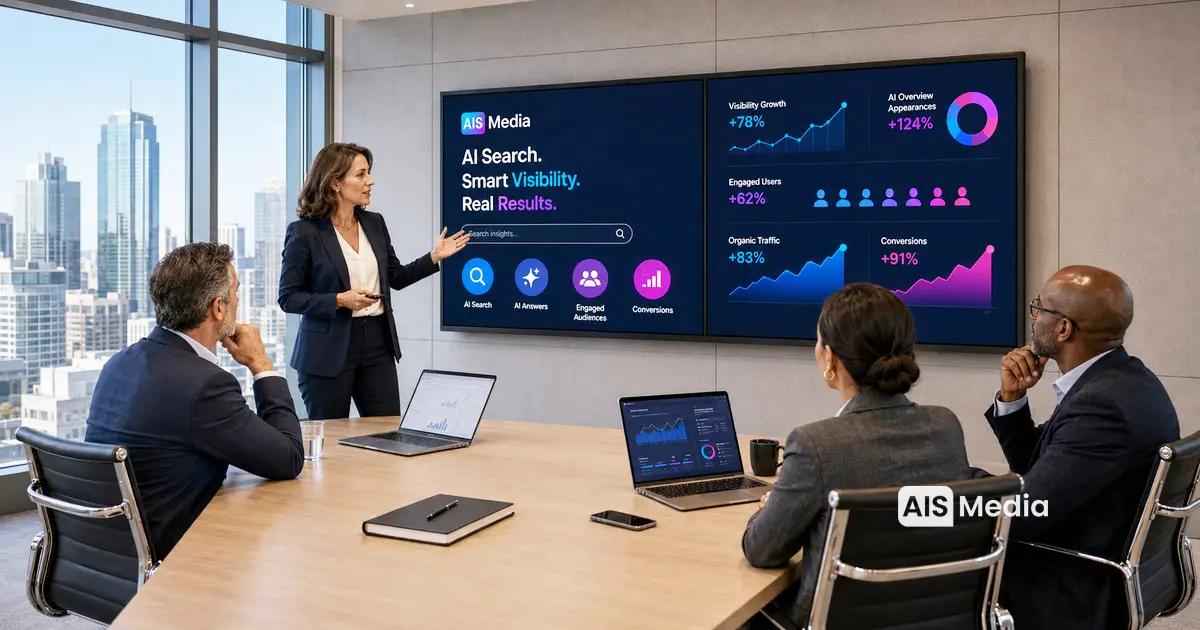
Artificial intelligence is no longer just enhancing Google’s products, it is becoming the foundation of how people search, discover information, and interact with brands. Google’s AI-powered search and advertising ecosystem, driven by Gemini, has significantly changed both organic search and paid advertising in 2026.
For businesses, marketers, and website owners, this shift means traditional SEO alone is no longer enough. Success now depends on optimizing content for AI-powered search experiences while embracing Google’s increasingly intelligent advertising automation.
In this article, we’ll explore how Google’s AI-powered Search and Advertising revolution is reshaping digital marketing and what businesses should do to stay competitive.
What Is Google’s AI-Powered Search?
Google’s AI-powered Search uses Gemini to better understand user intent instead of simply matching keywords.
Rather than displaying only a list of blue links, Google now provides:
- AI-generated summaries
- Context-aware answers
- Follow-up conversations
- Personalized recommendations
- Multi-step search assistance
This creates a more conversational experience where users receive complete answers without needing multiple searches.
Key Features
- AI Overviews
- Conversational Search
- Multimodal Search (text, voice, images)
- Personalized AI recommendations
- Context-aware search refinement
How Gemini Is Changing Google Search
Gemini serves as Google’s advanced AI model powering many of its newest search capabilities.
Instead of looking at individual keywords, Gemini understands:
- User intent
- Context
- Previous search history (where appropriate)
- Relationships between topics
- Natural language questions
For businesses, this means content quality and topical authority matter more than ever.
Pages that comprehensively answer user questions have a much higher chance of being featured within AI-generated search experiences.
Google’s AI Advertising Revolution
Search isn’t the only area being transformed.
Google Ads now relies heavily on artificial intelligence to automate campaign management.
New AI capabilities include:
AI Max Campaigns
AI Max automatically:
- Identifies new customer opportunities
- Expands keyword targeting intelligently
- Optimizes bidding
- Generates ad variations
- Improves conversions using machine learning
Instead of manually managing every keyword, advertisers can allow AI to discover high-performing audiences and search intent patterns.
Smarter Campaign Automation
Google’s advertising platform now automates many tasks that previously required daily management.
AI helps optimize:
- Budget allocation
- Audience targeting
- Bid strategies
- Creative testing
- Conversion optimization
- Performance forecasting
Marketers spend less time making manual adjustments and more time focusing on strategy.
Conversational Advertising
One of Google’s biggest innovations is conversational advertising.
Rather than static ads, AI enables users to interact naturally with businesses.
Customers can:
- Ask questions
- Compare products
- Request recommendations
- Learn pricing
- Receive personalized suggestions
This creates a smoother buying experience while increasing engagement and conversion opportunities.
What This Means for SEO
As Google becomes more AI-driven, SEO is evolving.
Businesses should focus on:
1. Answering Real Questions
Content should directly answer the questions customers ask.
Use:
- FAQs
- How-to guides
- Comparison articles
- Step-by-step explanations
This improves visibility in AI-generated responses.
2. Building Topical Authority
Publishing one article isn’t enough.
Google increasingly rewards websites that demonstrate expertise across an entire subject.
A strong content strategy includes:
- Pillar pages
- Supporting cluster content
- Internal linking
- Regular content updates
This helps AI understand your website as a trusted authority.
3. Optimizing for Natural Language
Users increasingly search using conversational phrases.
Instead of targeting only:
digital marketing agency
Optimize for:
How can an AI-powered digital marketing agency improve my business?
Natural language content performs better for AI-powered search experiences.
4. Demonstrating E-E-A-T
Google continues emphasizing:
- Experience
- Expertise
- Authoritativeness
- Trustworthiness
Include:
- Author bios
- Real case studies
- Credible sources
- Updated statistics
- Customer testimonials
These signals strengthen both SEO and AI visibility.
How AI Is Changing Paid Advertising
Traditional PPC management relied heavily on manual optimization.
Today, AI analyzes millions of data points in real time.
Benefits include:
| Traditional PPC | AI-Powered Advertising |
|---|---|
| Manual bidding | Automated bidding |
| Keyword-focused | Intent-focused |
| Static ads | Dynamic AI-generated ads |
| Limited testing | Continuous optimization |
| Human predictions | Machine learning forecasting |
Businesses using AI-powered advertising often gain faster optimization and improved campaign efficiency.
Best Practices for Businesses in 2026
To stay competitive, businesses should:
- Publish helpful, experience-driven content.
- Optimize for conversational search.
- Build topical authority with pillar and cluster content.
- Use structured data where appropriate.
- Keep service pages updated.
- Combine SEO with AI-powered Google Ads strategies.
- Monitor AI search visibility alongside traditional rankings.
- Focus on user intent instead of keyword density.
Key Takeaways
Google’s AI-powered Search and Advertising ecosystem is fundamentally changing digital marketing.
Businesses that continue relying solely on traditional SEO or manual PPC management risk falling behind.
Success in 2026 requires combining:
- High-quality SEO content
- AI search optimization
- Conversational content
- Smart Google Ads automation
- Strong topical authority
- Excellent user experience
Organizations that adapt early will be better positioned to earn visibility across both AI-generated search experiences and traditional search results.
Frequently Asked Questions Google’s AI-Powered Search and Advertising
What is Google’s AI-powered Search?
Google’s AI-powered Search uses Gemini to understand search intent and generate conversational answers, summaries, and recommendations instead of simply matching keywords.
What is AI Max in Google Ads?
AI Max is Google’s AI-driven advertising technology that automates targeting, bidding, creative optimization, and audience expansion to improve campaign performance.
How does Gemini affect SEO?
Gemini prioritizes content that demonstrates expertise, answers user questions thoroughly, and provides valuable context rather than simply targeting keywords.
Should businesses still invest in SEO?
Absolutely. SEO remains essential, but it now includes optimizing for AI-generated search experiences, conversational queries, and topical authority.
How can businesses prepare for AI-powered search?
Businesses should create helpful content, strengthen internal linking, publish topic clusters, improve website trust signals, and combine SEO with AI-enhanced advertising strategies.
Why Adapting to Google’s AI Evolution Matters
Google’s AI-powered Search and Advertising revolution is redefining how businesses connect with customers online. As Gemini continues to shape search experiences and advertising automation becomes increasingly intelligent, brands must evolve beyond traditional SEO and PPC strategies.
The most successful organizations will invest in high-quality, user-focused content, embrace AI-driven advertising tools, and build strong topical authority that helps both search engines and AI systems understand their expertise. By adapting now, businesses can improve visibility, attract more qualified traffic, and stay competitive in the rapidly evolving digital landscape.
Ready to future-proof your digital marketing strategy? Partner with AIS Media to optimize your website for AI-powered search, strengthen your SEO foundation, and maximize performance with intelligent Google Ads campaigns.