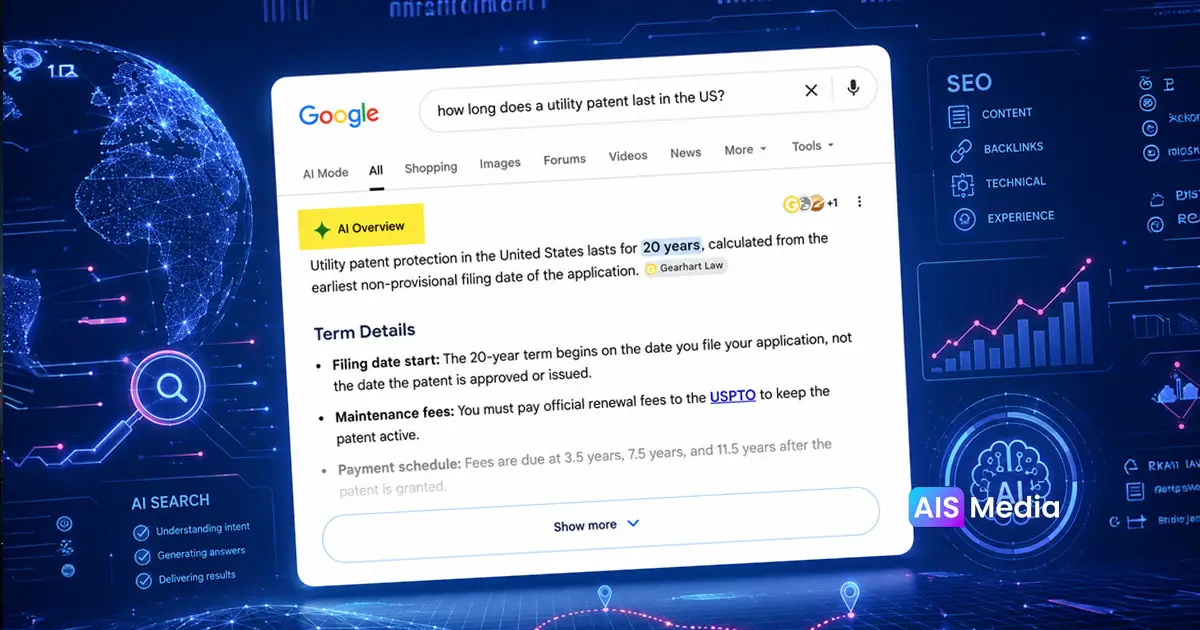
Artificial intelligence has changed search faster than any Google update in the past decade.
Instead of showing users ten blue links, search engines now generate answers before someone ever visits a website. Google AI Overviews, ChatGPT, Perplexity, Microsoft Copilot, and voice assistants increasingly answer questions directly. Users get what they need without clicking through to a business website.
For marketers, this creates a new challenge. Organic traffic may decline even while search visibility increases. Many companies are already seeing fewer clicks despite maintaining strong rankings because AI-generated answers satisfy the searcher’s intent immediately.
Rather than measuring success only by website sessions, forward-thinking companies focus on becoming the trusted source AI platforms reference, summarize, and recommend. Visibility now happens before the click, not after it.
That means your brand must earn trust in places that AI systems recognize, including industry publications, authoritative citations, structured content, expert commentary, and conversational resources.
The businesses that embrace zero click marketing today won’t simply survive declining click-through rates. They’ll influence buying decisions earlier, build stronger brand recognition, and create more qualified opportunities before competitors even enter the conversation.
What Is Zero Click Marketing?
Traditional SEO focused on one goal: earn the click.
Today’s search landscape works differently.
A growing percentage of searches end without someone visiting a website. Instead, users receive answers directly from search engines or AI assistants.
This behavior is known as a zero-click search.
Zero click marketing expands on that concept. Instead of optimizing solely for traffic, marketers optimize for visibility inside AI-generated answers, featured snippets, knowledge panels, local packs, voice assistants, and recommendation engines.
The objective changes from:
“How do we get the click?”
to
“How do we become the trusted answer?”
That subtle difference changes nearly every content strategy.
Why Zero-Click Searches Are Growing
Several trends are accelerating this shift.
AI-generated answers
Google AI Overviews summarize information from multiple trusted sources before users visit a website.
ChatGPT, Claude, Gemini, and Perplexity perform similar functions by synthesizing content instead of displaying traditional search results.
Voice search
People increasingly ask conversational questions through smartphones, smart speakers, and in-car assistants.
Instead of browsing several pages, users expect one clear answer.
Featured snippets
Google has spent years rewarding concise, structured answers that appear above traditional organic listings.
AI search simply expands this concept.
Knowledge Graphs
Businesses, products, and people increasingly appear inside Google’s Knowledge Graph rather than standard search listings.
Again, users receive answers without leaving Google.
The Numbers Behind the Shift
The trend isn’t theoretical.
Research continues to show how quickly search behavior is evolving.
Some key findings include:
- AI Overviews are appearing across a growing percentage of informational searches.
- Featured snippets continue to reduce click-through rates for many informational keywords.
- Voice search usage continues to rise as smart devices become more common.
- More users now begin product research inside AI assistants before opening traditional search engines.
- Branded searches remain significantly more resilient than generic informational searches.
The implication is clear.
Businesses relying only on traditional organic traffic may find themselves losing visibility even while maintaining rankings.
Why This Matters for B2B Companies
For B2B organizations, buying journeys are becoming longer and more research-driven.
Decision makers often ask dozens of questions before contacting a vendor.
Examples include:
- What is predictive maintenance software?
- Which CRM integrates with Microsoft Dynamics?
- How does AI improve manufacturing operations?
- Best marketing agency for healthcare companies
Increasingly, these questions receive AI-generated summaries.
If your company isn’t referenced in those summaries, you become invisible during the earliest stage of the buying process.
That’s a significant competitive disadvantage.
Conversely, brands consistently cited inside AI answers begin building trust long before prospects schedule a demo or request pricing.
Visibility Has Replaced Rankings
Rankings still matter.
But rankings alone no longer guarantee traffic.
Consider two companies ranking on page one.
Company A receives the click.
Company B becomes the expert quoted inside Google’s AI Overview.
Many users never visit either website, yet they remember Company B because the AI assistant mentioned it first.
That mention influences future branded searches.
It shapes purchasing decisions.
It builds authority.
This is exactly what zero click marketing aims to accomplish.
The New Marketing Funnel
Traditional marketing looked something like this:
Search → Click → Website → Lead → Customer
AI search introduces several new touchpoints.
Now the journey often resembles:
Question → AI Answer → Brand Recognition → Branded Search → Website → Lead → Customer
Notice what changed.
The website is no longer the first interaction.
Brand awareness happens much earlier.
Companies that understand this shift produce content designed to educate AI systems as much as human readers.
Five Strategies That Win in Zero Click Marketing
The brands succeeding in AI search tend to follow the same playbook.
They focus on five core areas:
1. Build branded authority
Become recognized across trusted publications, podcasts, interviews, and industry websites.
2. Strengthen citation signals
Maintain consistent business information across directories, review platforms, and authoritative databases.
3. Create answer-first content
Write concise, structured content that AI systems can easily summarize.
4. Use subtle, value-driven CTAs
Offer resources naturally instead of interrupting the reading experience.
5. Publish helpful downloadable assets
Frameworks, templates, benchmark reports, and checklists continue attracting qualified leads even in zero-click environments.
Together, these strategies transform your content from simply ranking in search results to becoming part of the answers AI platforms trust.
Branded Mentions Are Becoming the New Backlinks
Backlinks remain important.
But AI search has introduced another signal that’s rapidly increasing in value: branded mentions.
A brand doesn’t always need a hyperlink to influence AI systems.
If respected publications consistently discuss your company alongside a specific topic, AI models begin associating your brand with that area of expertise.
Think about how people naturally recommend businesses.
Someone might say:
“AIS Media has published excellent research on AI search optimization.”
No link is necessary.
The mention alone reinforces expertise.
When enough trusted websites make similar references, AI systems build confidence that your organization deserves inclusion in future answers.
Why AI Values Brand Mentions
Large language models don’t evaluate information exactly like Google’s traditional algorithm.
Instead, they look for repeated patterns across trusted sources.
Imagine hundreds of articles discussing:
- AIS Media and AI search optimization
- AIS Media and digital marketing strategy
- AIS Media and Answer Engine Optimization
- AIS Media and enterprise SEO
Those recurring relationships strengthen topical authority.
Over time, AI systems begin connecting your brand with those concepts automatically.
This is why modern authority extends beyond backlinks alone.
Reputation matters.
Consistency matters.
Recognition matters.
Where Branded Mentions Should Come From
Not every mention carries equal weight.
Focus on earning visibility from authoritative sources such as:
- Industry publications
- Association websites
- Research reports
- Podcast interviews
- Conference presentations
- University resources
- News coverage
- Partner websites
- Expert roundups
- Original research citations
These sources reinforce trust because they already possess established authority.
The stronger the publication, the stronger the signal.
Practical Example
Imagine two cybersecurity software companies.
Both have similar websites.
Each company publishes blog content.
In addition, both earn quality backlinks.
One company also appears in:
- Gartner discussions
- Industry podcasts
- Cybersecurity conference speaker lists
- Trade publication interviews
- LinkedIn thought leadership articles
- Vendor comparison reports
When an executive asks ChatGPT:
“Who are trusted cybersecurity vendors for mid-sized manufacturers?”
Which company is more likely to appear?
The one with broader authority across the web.
Not because of one backlink.
Because its reputation exists everywhere.
That’s exactly how zero click marketing builds influence.
How AIS Media Helps Brands Earn Mentions
At AIS Media, we encourage clients to think beyond traditional link-building campaigns.
Instead, we focus on becoming part of the industry’s ongoing conversation.
That includes:
- Publishing proprietary research
- Speaking at industry events
- Creating benchmark reports
- Participating in expert roundups
- Appearing on podcasts
- Contributing guest articles
- Sharing original AI marketing insights
Every mention expands your digital footprint.
Those citations strengthen AI confidence in your brand.
Over time, these appearances increase the likelihood that your brand will appear in future AI-generated answers.
Because in the era of zero-click marketing, authority isn’t measured only by who links to you.
It’s measured by who talks about you.
Citations and Industry Authority: The Trust Signals AI Looks For
Authority has always mattered in search. What has changed is how authority is measured.
Traditional SEO emphasized backlinks as the primary trust signal. While backlinks remain valuable, AI-powered search evaluates a broader set of indicators. It looks for consistent, credible information across multiple trusted sources.
This is where citations become a competitive advantage.
In zero click marketing, citations help AI systems verify that your business is legitimate, knowledgeable, and recognized within its industry. The more consistently your brand appears across authoritative sources, the more confidence AI platforms have when recommending or referencing your content.
What Are Citations?
A citation is any online mention of your business information, whether it includes a link or not.
For local businesses, citations often include:
- Business name
- Address
- Phone number
- Website
- Business category
For B2B organizations, citations extend beyond local directories and include:
- Industry association memberships
- Software marketplaces
- Review platforms
- Vendor directories
- Research publications
- Analyst reports
- Partner websites
- Professional organizations
- Event speaker profiles
- Press releases
Every accurate citation reinforces your digital identity.
Think of citations as verification points. When AI finds the same business details repeated across trustworthy websites, it gains confidence that your organization is credible.
Citation Consistency Matters
One inconsistent business listing isn’t likely to hurt your visibility.
Hundreds of inconsistent listings can.
Imagine AI discovering three different phone numbers, two company names, and multiple website URLs associated with your brand. That inconsistency introduces uncertainty.
Consistency reduces doubt.
Every business profile should use identical information across platforms, including:
- Company name
- Website URL
- Logo
- Company description
- Social profiles
- Contact information
- Industry classification
This consistency strengthens both traditional SEO and AI-powered discovery.
Industry-Specific Citations Carry More Weight
Not all citations are equal.
Being listed in a respected industry directory often carries more authority than dozens of generic business listings.
For example, a cybersecurity company benefits more from recognition on respected technology publications than from hundreds of low-quality directories.
Similarly, a healthcare organization earns stronger trust signals through medical associations, healthcare publications, and accredited directories.
Quality consistently outweighs quantity.
Build an AI-Friendly Citation Strategy
To strengthen your authority, prioritize these opportunities:
- Audit your existing citations for consistency.
- Claim profiles on reputable industry directories.
- Encourage customer reviews on trusted platforms.
- Contribute expert insights to industry publications.
- Publish original research others can reference.
- Participate in conferences and webinars.
- Secure mentions from partners and vendors.
Each citation increases your chances of appearing in AI-generated recommendations.
Why Embedded CTAs Work Better in Zero Click Marketing
The purpose of content has changed.
Readers no longer arrive at your website after browsing five search results. They often arrive after an AI assistant has already summarized the topic for them.
That means they’ve already learned the basics.
What they’re looking for now is additional value.
This is why traditional calls to action often underperform in zero click marketing.
Buttons that say “Contact Us Today” or “Schedule a Demo” interrupt the learning experience instead of enhancing it.
Modern CTAs should feel like the next logical step.
Offer More Than You Sell
People are willing to exchange their email address for something genuinely useful.
Examples include:
- Benchmark reports
- Industry research
- Templates
- Checklists
- ROI calculators
- Assessment tools
- Planning frameworks
Instead of asking readers to buy, invite them to learn more.
For example:
Download our Zero-Click Marketing Benchmark Report to see how your brand compares with competitors in AI search visibility.
That CTA feels educational rather than promotional.
Place CTAs Naturally
The best CTAs don’t interrupt the article.
They appear immediately after readers learn something valuable.
For example:
After explaining citation strategy:
Want to know if your business is sending the right trust signals?
Download our free AI Visibility Audit Checklist.
After discussing branded mentions:
See where your competitors are earning authority.
Access our Branded Visibility Assessment.
These offers continue the conversation rather than ending it.
Format CTAs for AI-Friendly Content
AI systems prefer structured, scannable content.
That means CTAs should also be concise and easy to understand.
Examples include:
Download: Zero-Click Marketing Audit Checklist
Get the AI Answer Positioning Framework
Request Your AI Visibility Scorecard
Compare Your Brand Against Industry Leaders
Notice the emphasis on value rather than sales.
That approach builds trust while increasing conversions.
Build a Conversational Content Strategy for AI Search
Search behavior has become more natural.
Instead of typing two or three keywords, users ask complete questions.
Examples include:
- What is zero click marketing?
- How can AI-generated answers reduce website traffic?
- Why does ChatGPT recommend certain brands?
- How do I improve visibility in Google’s AI Overview?
AI assistants respond best to content that mirrors these conversations.
That’s why conversational writing has become essential for zero click marketing.
Write the Way People Ask Questions
Many businesses still publish content around keyword phrases instead of real questions.
Compare these two headings.
Traditional SEO
Zero Click Marketing Benefits
AI-Friendly SEO
What Are the Benefits of Zero Click Marketing?
The second version matches how users actually search.
It also increases the likelihood of appearing in featured snippets and AI-generated responses.
Structure Content for Easy Extraction
AI systems favor content that is easy to summarize.
Simple formatting helps.
Use:
- Short paragraphs
- Clear H2 and H3 headings
- Numbered lists
- Bullet points
- Definitions
- Tables
- FAQs
Each section should answer one question completely before moving to the next.
This makes your content easier for both readers and AI models to understand.
Think Beyond Google
Your content may be surfaced by:
- ChatGPT
- Google AI Overviews
- Perplexity
- Microsoft Copilot
- Gemini
- Voice assistants
- Enterprise AI tools
Each platform values clear, authoritative answers.
Writing conversationally improves visibility across all of them.
Build Topic Clusters Around User Questions
Instead of creating isolated blog posts, develop comprehensive content clusters.
For example, this article could connect to supporting resources such as:
- How AI Overviews Affect Organic Traffic
- Voice Search Optimization Best Practices
- Answer Engine Optimization Explained
- AI Citation Strategy for B2B Companies
- Building Brand Authority for AI Search
Together, these articles establish topical authority while giving AI systems more opportunities to reference your expertise.
Zero Click Marketing Is an Evolution, Not the End of SEO
The rules of digital marketing are changing, but the goal remains the same: build trust before asking for a customer’s business.
AI-powered search has shifted where that trust is earned. Instead of relying solely on website visits, brands must now compete for visibility within AI-generated answers, featured snippets, voice search results, and trusted industry conversations.
That’s the essence of zero click marketing.
The organizations that thrive won’t be the ones chasing every algorithm update. They’ll be the ones consistently publishing helpful content, earning authoritative mentions, maintaining strong citation signals, and creating resources that genuinely solve customer problems.
Traditional SEO isn’t disappearing. It’s evolving into something broader—one that values authority, credibility, and usefulness across the entire digital ecosystem.
For marketing leaders, this presents an opportunity rather than a setback.
By investing in AI-ready content today, you can influence buying decisions earlier, strengthen your brand’s reputation, and position your organization as the trusted answer customers encounter before they ever visit a website.
Frequently Asked Questions
What is zero click marketing?
Zero click marketing is a strategy that focuses on building visibility in AI-generated answers, featured snippets, voice search, and other search experiences where users receive information without clicking through to a website.
Is zero click marketing replacing traditional SEO?
No. Zero click marketing expands on traditional SEO by optimizing for AI visibility, branded authority, citations, and answer-first content in addition to search rankings.
How can businesses improve AI visibility?
Businesses can improve AI visibility by publishing authoritative content, earning branded mentions, maintaining consistent citations, using structured data, and creating conversational content that directly answers user questions.
Why are branded mentions important for AI search?
AI systems use branded mentions across trusted websites to understand which organizations are recognized as experts in a specific topic, even when those mentions don’t include backlinks.
What content performs best in AI-generated answers?
Clear, conversational content that directly answers questions, includes structured headings, concise explanations, lists, tables, and FAQs is more likely to appear in AI-generated responses.
Ready to Improve Your AI Search Visibility?
AIS Media helps B2B organizations build authority in the age of AI-powered search through SEO, Answer Engine Optimization (AEO), content strategy, digital PR, and AI visibility consulting.