AI shopping is giving holiday shoppers another way to find your store. A shopper needs a gift for a runner. The budget is $50. It has to arrive by Friday.
They can put that request into an AI shopping tool and discover a store they have never heard of. That store could be yours. It could also be your competitor’s.
For you, the stakes are simple: a new customer, or a sale you never had a chance to win.
As you prepare your holiday marketing, keep the ads that bring profitable orders. Also check what shoppers find when they ask AI for the kinds of products you sell. Both deserve your attention.
AI shopping vs. PPC: what’s the difference?
Pay-per-click advertising means you pay when someone clicks your ad. It can help you promote a sale quickly, highlight current stock and reach shoppers ready to buy, with control over bids and budgets.
Paid ads include more than text. Google Shopping ads can show your product’s photo, price and store name before someone clicks. Not every paid campaign uses click-based billing.
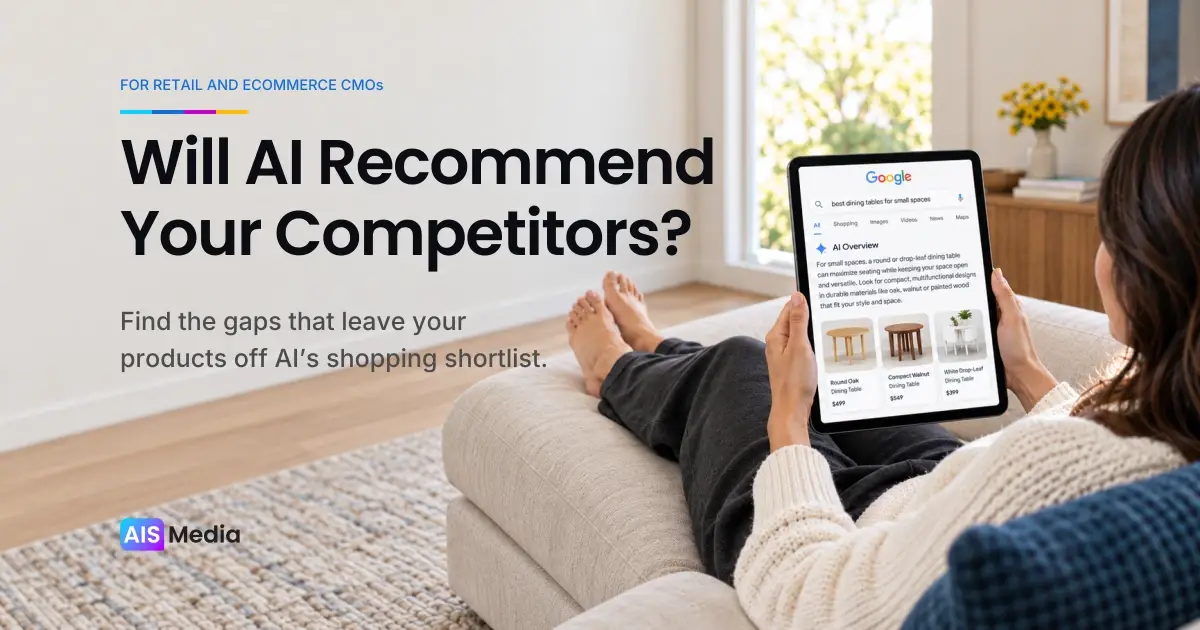
AI shopping helps people discover and compare products by describing what they need. A shopper can include a budget, a delivery deadline and the person they are buying for.
PPC describes how you pay for advertising. AI search describes how someone finds information. They can overlap.
ChatGPT advertising began testing in February 2026. In May, OpenAI introduced its Ads Manager beta and pay-per-click bidding. Advertisers can now choose click-based or impression-based billing.
Those ads are separate and clearly labeled. OpenAI says they do not influence ChatGPT’s answers, and its shopping guidance says product results are selected independently. Buying an ad does not buy a place in those independent recommendations.
For help choosing campaigns and measuring paid results, explore AIS Media’s PPC management services.
Start by testing AI shopping for the products you sell
If you’re a store owner or marketer, try shopping with AI for the kinds of products you sell.
First, pick ten products that matter to your holiday sales. Choose items you can supply and sell at a worthwhile profit.
Then try ChatGPT and Google AI Mode with real customer questions. For a running store, examples might include:
- “Find a gift for a new runner under $50 that can arrive by Friday.”
- “What running accessories make good gifts if I don’t know their shoe size?”
- “Where can I buy a running gift under $50 for pickup today near me?”
Use your actual location and dates. Start without naming your store so you can see which businesses get discovered.
Next, check whether your products appear, which competitors show up and whether the links and details are accurate. Repeat the questions over several days and look for patterns. One answer is an observation, not a fixed ranking.
Fix the details that could cost you the order
When you review your AI shopping results, look for problems you can correct:
- Price: Does the offer match your product page and checkout?
- Inventory: Are the right sizes, colors and quantities available?
- Delivery and pickup: Are deadlines, costs, locations and cutoff times clear?
- Returns: Can someone easily check gift returns, exchanges and restrictions?
- Product fit: Do you explain who the item suits, how it is used and what is included?
- Trust: Are genuine customer reviews easy to find?
Align your product pages with the shopping feeds you supply to each platform. Also assign someone to update them when prices, stock or holiday policies change.
Check your website on a phone. Can a customer find the information and finish buying? Ask your web team whether search systems can access important product details.
This is where ecommerce SEO still matters. Google says its SEO fundamentals apply to AI Overviews and AI Mode. It does not require special AI markup. Useful answers, accessible pages and accurate information give you a foundation to build on, without guaranteeing a recommendation.
AIS Media’s SEO and AI search services help businesses identify gaps and decide what to improve first.
FREE AI Search Playbook
Help your business get found, cited and chosen across Google and AI search. See which visibility gaps your team should address first.
Give shoppers a better reason to choose you
Useful Black Friday marketing ideas start with a customer’s problem.
For example, a last-minute shopper may value pickup today. Someone buying for a hobby they know nothing about may need advice. A thoughtful bundle can save them from choosing several items separately.
Compare a vague “Huge Holiday Sale” message with this specific offer:
“A gift for a new runner, under $50, ready for pickup today.”
That tells the shopper who it suits, what it costs and how soon they can get it. Use an offer like this only when you can fulfill it.
Whether someone finds you through AI shopping or an ad, the offer should stay consistent. Therefore, carry those details through your ads, product pages and store information. State the dates and restrictions clearly.
A discount gets attention. A useful answer helps win the sale.
Protect profit while you test new channels
Keep ads that produce profitable orders. Test new channels, including paid placements within AI shopping experiences, with limited spending and a clear way to judge results. There is no single budget split that fits every retailer.
Count product costs, advertising, discounts, shipping, payment fees and expected returns. Use the amount the customer actually pays after discounts.
For example, a $60 order with $30 in product costs, $15 in advertising, an $8 shipping subsidy and $2 in payment fees leaves $5 before returns and other expenses.
You can win the order and still lose money.
Therefore, review completed orders and profit alongside clicks and reported sales. Your ad report can look great while your bank account tells another story.
AI may also help someone discover you before they return through a branded search or visit directly. Review identifiable referrals and ask customers how they found you. Those clues can improve your understanding, but they will not credit every earlier interaction perfectly.
If you’re using AI shopping for your own gifts
Use AI for ideas, then verify the purchase details with the merchant.
Check the seller, the total price including shipping, the delivery date and the return policy. OpenAI notes that price and shipping updates may take time to appear, so confirm them before paying.
A cheap gift that arrives too late is no bargain.
Find out what may be costing you sales
Make AI shopping part of a practical plan for reaching your next customer. Start with AIS Media’s FREE AI Search Playbook. It helps businesses understand how to get found, cited and chosen across Google and AI search, and which SEO, content and website gaps deserve attention.
If you’re a business owner or CMO whose marketing spend is not turning into enough customers, AIS Media can help you review how customers find you. We can also assess where competitors appear ahead of you and which SEO, paid advertising, content and AI search problems to address first.
Bring your website, current campaigns and sales concerns to a complimentary growth consultation.
Before you spend more, find out what may be costing you sales.